

Graduate student Erin Conley (advisor: Prof. Kate Scholberg) has contributed an article on Fermilab's news site that outlines her research with the international Deep Underground Neutrino Experiment (DUNE). Click here to read Conley's story. read more about Grad Student Conley Provides an Update on the DUNE Experiment at Fermilab »
ATLAS Postdoctoral Associate Katherine Pachal was excited to get the chance to discuss searches for the LHC Run 3 with Symmetry Magazine. The next five years will be a very interesting time to search for new particles which travel a measurable distance in the detector before decaying. Although well-motivated, these signatures are historically under-explored due to the experimental challenges they pose. The Duke ATLAS group has invested significant effort in developing this research area and… read more about Postdoc Pachal Discusses LHC Experiments with Symmetry Magazine »

Prof. Patrick Charbonneau was featured in the Proceedings of the National Academy of Sciences of the United States of America (PNAS)'s article "Science and Culture: Universities move science labs to the kitchen". Click here to read more on his approach to helping students appreciate food and cooking through science. read more about Prof. Charbonneau Looks at the Science Behind Cooking »

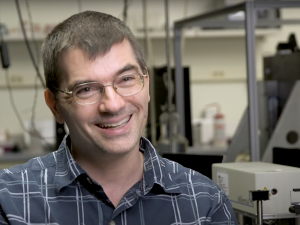
Prof. Martin Fischer has worked with Duke physician Eric Westman to prove that masking is an effective safeguard against COVID-19 and determined which types of masks worked the best. Their Science Advances paper can be read online here, Duke Health's article "Inexpensive, Accessible Device Provides Visual Proof that Masks Block Droplets" is here, and Trinity College's "Here's Visible Proof Masks Work" here. Photo Credit: Home Page photo, courtesy of Duke Health. read more about Prof. Fischer and Team Prove Masks Block COVID-19 Droplets »

Michael Troxel has always liked puzzles, especially challenging ones. Which is fortunate, since his job is solving some of the most perplexing, fundamental mysteries of the universe. “At some point in middle school I asked myself, What’s the hardest thing that I could try to do?” he said. “And at that point the hardest thing I knew about was astrophysics, so I think that was probably the first motivation for choosing this career, if I’m honest. But that was before I understood what it actually meant.” A cosmologist and… read more about Exploring the Mysteries of the Universe by Seeing the Invisible »
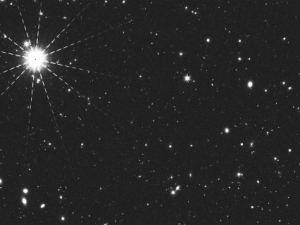
Prof. Michael Troxel has been awarded the Department of Energy Early Career Award. Trinity College of Arts & Sciences featured this news in an article on their website. Read "Exploring the Mysteries of the Universe by Seeing the Invisible" here. Congratulations! read more about Prof. Troxel Awarded DOE Early Career Award »

On June 10, 2020, over 70 members of the Duke Physics Department set aside their research, instructional, and administrative activities to participate in a nationwide strike called #ShutDownSTEM, organized by a multi-identity, intersectional coalition of STEM professionals. Participants used the day to reflect on the ways in which American physics communities, from small research groups, to undergraduate classes, university departments, multi-university collaborations, and national… read more about Duke Physics Community Anti-Racism Forum »
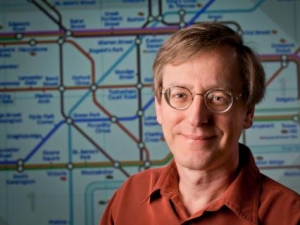
Prof. David Beratan has been featured on Trinity College of Arts & Sciences' webpage in a background piece to coincide with his 60th birthday tribute in the Journal of Physical Chemistry B. Click here to read "David Beratan Reflects on the Humans Behind the Science." read more about Prof. Beratan Looks Back on His Career in Two Tribute Articles »
While the Duke Community celebrates this unprecedented graduating class of 2020, we would like to highlight two Duke Physics graduate and undergraduate team members for their successful development, coordination and commitment to our faculty, staff and students and first ever virtual graduating class. Katherine Siler and Timothy Fields, Jr. would have been planning their normal annual graduations with their respective graduate and undergraduate students, but instead during… read more about Department of Physics Staff Spotlight – June 2020 »
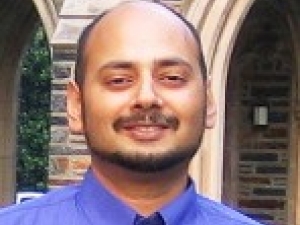
Prof. Ashutosh Kotwal has been awarded the Arts and Sciences Council's Faculty Research Grant for bringing together the Computer Science, Electrical and Computer Engineering, and Physics departments on "Applications of Artificial Intelligence". Prof. Kotwal has initiated this collaboration to advance the development and application of high-performance artificial-intelligence (AI) hardware in which the AI algorithms are directly embedded in silicon integrated circuits. The … read more about Prof. Kotwal Receives Research Grant for Artificial Intelligence Applications »
In 2020-2021, the Duke University Energy Initiative’s Energy Research Seed Fund will support projects addressing renewable energy’s integration into the grid, battery performance, electrochemical catalysts, utilities’ decision-making, the energy-water nexus, and energy’s connections with war and health.The Energy Research Seed Fund has a strong track record of investing in early-stage projects that go on to secure external support.The program will award six grants to projects involving thirteen faculty… read more about Energy Research Seed Fund awards six grants to Duke faculty to kickstart innovative projects »


Fifteen Duke Ph.D. students have received prestigious awards from the National Science Foundation’s Graduate Research Fellowship Program (NSF GRFP) for 2020. Launched in 1952, the GRFP is the oldest graduate fellowship of its kind. It supports outstanding graduate students in NSF-supported science, technology, engineering, and mathematics disciplines who are pursuing Ph.D. or research-based master’s degrees. Fellows receive a three-year stipend, coverage of tuition and fees, and opportunities for international research and… read more about 15 Ph.D. Students Receive Prestigious NSF Fellowships »
The Research Data Repository is a service of the Duke University Libraries that provides curation, access, and preservation of research data produced by the Duke community. In an interview with Duke's Office of Scientific Integrity, Prof. Patrick Charbonneau, associate professor of chemistry and physics, describes his motivations in helping develop and in heavily using this resource. Read it online here. read more about Prof. Charbonneau Interviewed on Research Data Repository »
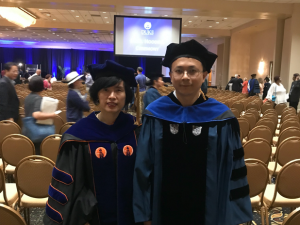
Dr. Yang Zhang’s thesis work just appeared in a paper on "Precision measurement of the neutral pion lifetime" in Science on May 1, 2020. Dr. Yang Zhang received his Ph.D. from Duke in May 2018 under the supervision of Prof. Haiyan Gao. Strong force is one of the four fundamental forces in nature and is the force responsible for binding nucleons into atomic nuclei. The theory describing the strong force is called quantum chromodynamics (QCD) with quarks and gluons as degrees… read more about Alum Zhang Published in Science, a Significant Contribution to PrimEx-II »

Congratulations to our faculty members Michael Rubinstein and Steffen Bass for being awarded distinguished professorships this year. Rubinstein has been named Aleksander S. Vesic Distinguished Professor of Mechanical Engineering and Materials Science and Bass has been named Arts & Sciences Professor of Physics. Rubinstein and Bass join the cohort of primary and joint Physics faculty with such chairs (Haiyan Gao, Ashutosh Kotwal, … read more about Bass and Rubinstein Receive Distinguished Professorships »
Duke University has awarded distinguished professorships to 29 faculty members from eight Duke colleges and schools. While the annual University Distinguished Professors dinner will be postponed until social gathering restrictions are lifted, Provost Sally Kornbluth is ready to congratulate this year’s recipients now. “I am thrilled to honor this wonderful cohort of scholars, teachers, and members of the Duke community,” Kornbluth said. “Becoming a distinguished professor at Duke is a great achievement, and one that is… read more about Duke Awards 29 University Distinguished Professorships »
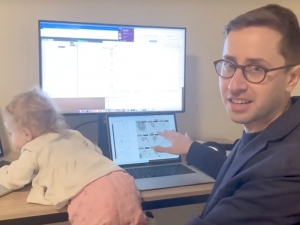
Prof. Daniel Scolnic (and his daughter, marking her video debut movie experience) and Prof. Patrick Charbonneau have been included in a video Duke made about how scientists are dealing with working from home during the COVID-19 pandemic. Read more about "Data at a Distance" on DukeToday's website here. read more about Professors Share Their Experiences Working from a Safe Distance »

Keep Teaching is sharing stories of how Duke faculty are implementing remote learning. Here, Michael A. Troxel, Assistant Professor of Physics, details his experience. My approach was to try to keep the class experience as consistent as possible. I have a lot of experience working on Zoom meetings in my research collaborations, so it wasn’t much of a change for my daily work mode. I got an iPad so I can easily share it as a virtual whiteboard on Zoom, so the students are watching me write out derivations and… read more about Recreating a Physics Classroom on Zoom »
In part of Duke's Keep Teaching initiative, Prof. Michael Troxel shared his experience teaching physics remotely with Zoom during the COVID-19 pandemic. Maintaining a fresh and interesting atmosphere has been a challenge for professors university-wide. Click here to read some of Troxel's tips. read more about Prof. Troxel Shares his Tips for Teaching from Home During COVID-19 »
Prof. Warren Warren, who holds appointments in Physics, Chemistry and Radiology, has been awarded the 2020 Günther Laukien Prize for his contributions to nuclear magnetic resonance spectroscopy (NMR) and its cousin, magnetic resonance imaging (MRI). MRI, which uses magnetic fields and radio waves to measure signals from spinning protons, has been used in medicine since the 1980s as a noninvasive way to create pictures of the inside of the body without using radiation like X-ray or CT scans do. One of… read more about Prof. Warren Wins Award for Magnetic Resonance »
Prof. Patrick Charbonneau, Associate Professor of Chemistry and Physics, is trying to crack the glass problem as part of an international Simons Collaboration. In a new video from Duke's Why Do You Study That? series, he explains what is the problem with glasses and cracks some along the way. read more about Prof. Charbonneau Tries to Crack the Glass Problem »
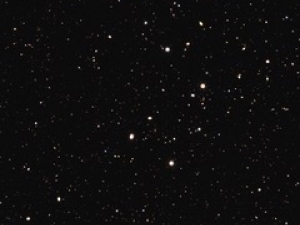
Profs. Daniel Scolnic and Michael Troxel are science leaders for WFIRST, a next generation NASA flagship mission. WFIRST passed its agency-level review by the NASA Agency Program Management Council under what is called Key Decision Point C, which allows the mission to formally enter a development phase and begin construction of engineering and test components for the mission. The WFIRST telescope is expected to be launched in 2025 and will enable the most precise measurements of dark energy… read more about NASA Science Mission WFIRST, with Science Led by Prof. Scolnic and Troxel, Passes Key Milestone, Launch to be 2025 »

Research could help pave the way to more versatile, low-cost MRI for studying metabolic reactions in real-time Duke professor Warren Warren has been awarded the 2020 Günther Laukien Prize for his contributions to nuclear magnetic resonance spectroscopy (NMR) and its cousin, magnetic resonance imaging (MRI). MRI, which uses magnetic fields and radio waves to measure signals from spinning protons, has been used in medicine since the 1980s as a noninvasive way to create pictures of the inside of the… read more about Duke Professor Warren Warren Wins Award for Magnetic Resonance »
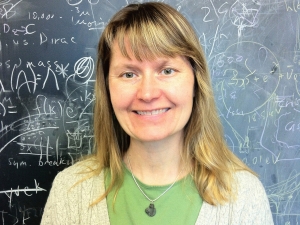
Prof. Kate Scholberg has been named an outstanding referee by the editors of the Physical Review journals. Scholberg is one of 147 Outstanding Referees for 2020 selected by the American Physical Society (APS) that have demonstrated exceptional work in the assessment of manuscripts published in the Physical Review journals. A full list of the Outstanding Referees is available online here. Instituted in 2008, the Outstanding Referee program annually recognizes… read more about Prof. Scholberg Announced as APS Outstanding Referee for 2020 »
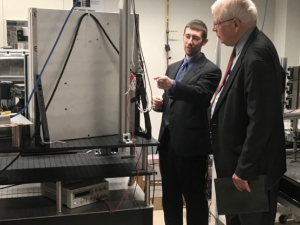
Alum Joel Greenberg (PhD '12, advisor: Gauthier), now research professor of Electrical and Computer Engineering, is involved in research to improve airport screening with x-ray diffraction. The team, which also includes Physics secondary Prof. Anuj Kapadia, primarily appointed in Radiology, demonstrated their technologies for U.S. Representative David Price last week. Read about more about "A Speedier and More… read more about Alum Greenberg and Prof. Kapadia Improve Airport Screening »

The “Snowmass” study organized by the American Physical Society Division of Particles and Fields (DPF) is the long-term planning exercise of the U.S. High Energy Physics (HEP) Community, which takes place approximately once a decade. From the DPF newsletter (link: https://www.aps.org/units/dpf/newsletters/upload/January-2020-Newsletter.pdf) "Snowmass is an opportunity for the entire HEP community to come together to identify and document a vision for the future of particle physics in the U.S. and with its… read more about Profs. Barbeau and Scholberg Selected as “Snowmass” Frontier Conveners »

The positive decision by the Department of Energy for the construction of the EIC is a great step forward for the field of nuclear physics. This new facility will give unprecedented insight into the dynamics that are responsible for much of the properties of the visible mass. It will provide much deeper insight into the building blocks of matter than ever before with the potential for transformative discoveries. Researchers at Duke, in particular Professors Haiyan Gao, Berndt Mueller… read more about The Electron-Ion-Collider to be built at Brookhaven National Lab – Duke Faculty helped pave the way! »

Several members of the cosmology group made their way this month to the LSST Dark Energy Science Collaboration meeting in Arizona. Here you see some of our faculty, postdocs, grad students and alumni including three former Duke physics undergraduates who are now in graduate school and working with us as colleagues. read more about Cosomology Group Members Attend LSST Meeting »